


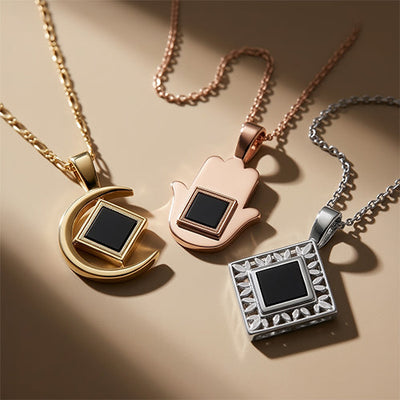
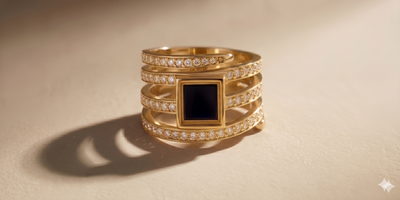
Avant toute chose : SIRR ne protège pas, ne porte pas chance, ne confère aucun pouvoir
Nous tenons à le dire clairement, avant même de parler technique ou jurisprudence.
SIRR n'est pas une amulette. SIRR n'est pas un talisman. Ce bijou ne protège de rien, n'attire ni chance ni bénédiction, n'éloigne aucun mal et n'exauce aucun vœu. Il ne remplace ni l'invocation, ni la prière, ni la confiance placée en Allah seul.
Attribuer un pouvoir à un objet — quel qu'il soit, aussi noble soit sa matière ou son contenu — relève du shirk, la faute la plus grave en Islam. Aucune de nos communications, aucun de nos visuels, aucune de nos descriptions produit ne contiendra jamais de promesse de protection, de baraka ou de chance. C'est une ligne rouge, et elle est absolue.
Alors pourquoi SIRR existe-t-il ?
Pour une seule raison : le lien. Porter SIRR, c'est garder discrètement près de soi ce qui compte le plus. Le bénéfice n'est pas dans l'objet : il est dans le rappel. Un bijou ne fait rien pour vous ; il vous rappelle simplement qui vous êtes et à quoi vous vous rattachez.
La suite de cette page explique comment nous avons conçu le produit pour que ce lien reste respectueux du texte sacré.
Peut-on aller aux toilettes avec un bijou SIRR ?
Oui. Rien dans le fiqh ne s'y oppose, et le raisonnement est exposé ci-dessous.
Certification / Religious opinion – SIRR pendant with nanochip (Quranic text)
Why is this question asked?
When it comes to a sacred text, it's natural to wonder:
Can it be carried in all daily situations? Is it considered "like a muṣḥaf"? And what about unclean places?
At SIRR, we took this question very seriously. The product was therefore designed from the outset with a simple principle in mind: the honor of the Quran is preserved when the text is neither visible, displayed, nor audible.
The religious principle in brief


Certification / Religious opinion – SIRR pendant with nanochip (Quranic text)
The Religious Principle in Brief
In Islamic jurisprudence, the question of entering unholy places with sacred elements is not based on the idea of "impurity being transmitted to the Quran," but on taʿẓīm (تعظيم) — reverence, and the prevention of any form of disrespect towards sacred verses or Names.
The central distinction is as follows:
Visible / displayed text: readable verses, open screen, voluntary display vs Concealed, non-displayed content: stored, closed, not visible, not audible
SIRR clearly belongs to the second category. The chip is nano-technological, the text is not visible during normal use, and there is neither "display" nor "reading." In other words: it is not "apparent writing" introduced into an unholy place.
Certification / Religious opinion - SIRR pendant with nanochip (Quranic text)
Why does this question arise?
When it comes to a sacred text, it is natural to ask:
Can it be worn in all daily situations? Is it considered "like a muṣḥaf"? And what about impure places?
At SIRR, we have taken this question very seriously. The product was therefore designed from the outset according to a simple principle: the honor of the Quran is preserved when the text is neither visible, displayed, nor audible.
The religious principle in brief
In Islamic jurisprudence, the question of entering impure places with sacred elements is not based on the idea of "impurity being transmitted to the Quran," but on taʿẓīm (تعظيم) — respect, and the prevention of any form of disrespect towards verses or sacred Names.
The central distinction is as follows:
Visible / displayed text: legible verses, open screen, voluntary display vs Hidden / not displayed content: stored, closed, not visible, not audible
SIRR clearly belongs to the second category. The chip is nanotechnological, the text is not visible in normal use, and there is neither "display" nor "reading." In other words: it is not "apparent writing" introduced into an impure place.
Concretely, what does this mean for you?
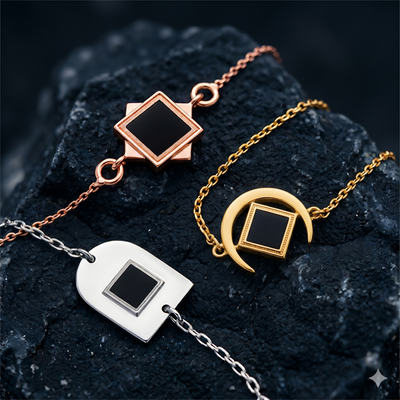
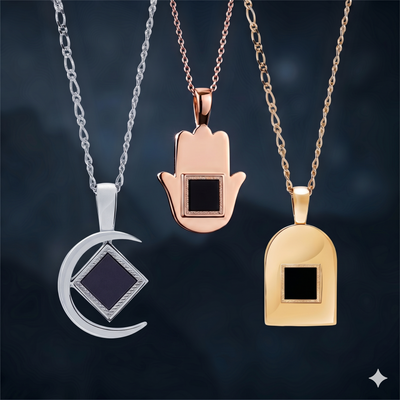
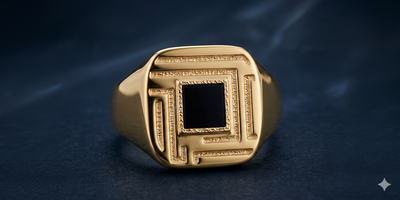
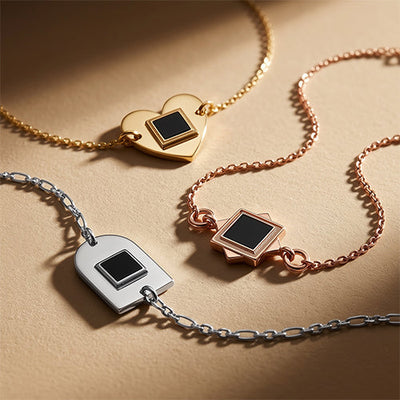
SIRR is designed for daily wear.
The Quranic text is located inside a sealed and protected nano-chip and does not function as an "open muṣḥaf" or a visible text.
In simple terms:
You are not wearing a "written page" or an "open book."
You are wearing a closed piece of jewelry, where the text is preserved and hidden — and this is precisely what underpins the legal logic allowing it to be worn daily.
Our commitment to the honor of the Quran (the SIRR philosophy)
SIRR is not a talisman or an "amulet" (safqa / commercial baraka).
It is a premium piece of jewelry whose objective is preservation, respect, identity, and authentication.
We are committed to:
Not displaying verses as mere "decoration" or an entertaining element.
Not selling the product with promises of luck, magical protection, or superstition.
Maintaining a line of pure respect — in design, packaging, and communication.
For those who want to understand in depth: basis of permission and sources
1) Not displayed = the cause of prohibition does not exist
In an official fatwa from Dar al-Iftaa in Jordan (Jordan Iftaa), it is clearly established that the problem arises when verses appear visibly (e.g., on an open screen). However, when they are hidden / the device is closed, there is no impediment to introducing it, because the cause of the prohibition is not present.
Excerpt from wording:
« فلا حرج… لانتفاء علة المنع »
("There is no impediment... because the cause of the prohibition does not exist.")
2) Covered / hidden = permitted
In recognized legal sources (including documented contemporary opinions), a clear rule is found: when an item containing dhikr (ذكر) / a sacred Name is in a pocket and covered, it is considered not apparent — and it is therefore permissible to enter with it.
Excerpt from wording:
« يجوز… إذا كانت… مستورة »
(It is permissible... if the thing is hidden.)
3) In case of necessity, there is explicit permission
Even in stricter approaches concerning the muṣḥaf, a distinction exists: in case of ḍarūra (ضرورة) — real necessity, for example, risk of loss/theft or inability to place it in a safe place, explicit permission is mentioned.
Excerpt from wording:
« لا يجوز إلا عند الضرورة… فلا بأس »
(It is only permissible in case of necessity... and then there is no problem.)
How does this apply directly to SIRR?
The foundations above rely on a central condition: the text is not apparent and is not "active" in an impure place.
With SIRR:
The text is not visible in normal use.
There is no possibility of "displaying" verses as on a screen.
There is no automatic audio playback.
The chip is sealed in a protected piece of jewelry.
Thus, SIRR naturally falls into the category of "hidden, not displayed content," on which these permissions are based.
One sentence to conclude and reassure you
SIRR is a closed piece of jewelry containing a non-visible Quranic text. It is neither an open muṣḥaf nor a talisman. It is therefore suitable for respectful daily wear, in accordance with the principles of Islamic jurisprudence that distinguish between apparent text and hidden content.
